
How do I get my website into AI search results?
The 6 components of Generative Engine Optimization
by Monique Maessen-Demoet, web designer at Demoet graphic design
Something is changing, and I think you’ve already noticed it yourself. At the top of Google, you increasingly see a ready-made answer provided directly by Google AI itself or by ChatGPT. No more list of websites—just the answer right there. And chances are, you won’t click through any further.
AI is increasingly determining which companies get mentioned and which don’t. Having a good website alone is no longer enough for that. After all, AI doesn’t look for the highest-ranking page, but for the most accessible source—the one that is easiest to read and understand. Optimizing a website for this is called GEO (Generative Engine Optimization), and most companies have never even heard of it.
In this blog post, I explain exactly what GEO is, how it differs from SEO, the six concrete elements that make your website AI-proof, and why starting now is more valuable than waiting.
To briefly answer the question "How do I get my website into AI search results?": your website appears in AI answers when AI can easily read, understand, and cite your content. This is known as Generative Engine Optimization. It is not about ranking high in Google, but about being clear and structured enough for AI to confidently cite you as a source.
What exactly is GEO?
GEO stands for Generative Engine Optimization essentially, optimizing for generative search engines. You optimize your website so that AI tools like ChatGPT, Google AI, or Perplexity understand your content and use it as a source for their answers.
It used to work like this: you ensured Google found and favorably ranked your website, then people clicked your link and visited your site. But the rules of the game have changed. People increasingly type their questions directly into an AI tool and receive an immediate answer. No list of links to click through, just an answer.
Those answers have to come from somewhere. AI draws its information from websites, articles, and reviews. If your website is structured so that AI can easily read and understand it, you are more likely to be cited in that answer. The key concept here is "retrievability." It is not who ranks highest on Google that determines whom the AI mentions, but rather who the AI can most easily read, understand, and cite. That is what GEO is all about.
What is the difference between GEO and SEO?
You are likely familiar with SEO, search engine optimization. You ensure your website is technically sound, write headlines and copy containing the right keywords, and aim to rank as high as possible in Google search results. SEO is all about rankings.
GEO works differently. The goal isn't rankings, but source attribution. You want AI to cite you when answering a question relevant to your field. A well-known idea in the online marketing world is this: AI doesn't look for the highest-ranking page on Google; it looks for the most accessible source. Brands currently winning in AI search results have figured out how to make themselves easily discoverable by AI. Brands that are losing have optimized for Google rankings. That involves a different algorithm with different rules, one that searches in different places.
In other words: you could hold the number one spot on Google and still be completely invisible to AI. Conversely, a smaller, well-structured website with clear content might be picked up and cited by AI.
SEO and GEO are not mutually exclusive. A well-built website works on both fronts. However, the approaches differ, and if you have focused solely on SEO until now, you are missing half the story.
A website that is well-optimized for AI often performs better with visitors who actually click through. In my blog post on conversion-oriented web design, you can read how to build a website that works well in both respects.
The 6 elements of a GEO-ready website
GEO is not just a standalone trick. It is an approach comprising multiple mutually reinforcing components. A strong FAQ section works better when combined with a complete Google Business Profile and clear content elsewhere on your site. Below are the six components that form the foundation of GEO.
1. Google Business Profile
AI pulls local business information directly from Google. An incomplete or outdated profile makes you virtually invisible to AI systems looking for local providers. Your business name, address, phone number, category, and opening hours should be accurate and consistent everywhere they appear online.
2. Collecting and displaying reviews
For GEO, reviews are what backlinks are for SEO: they build the trust AI needs before it is willing to mention your business. Both actively gathering new reviews and displaying them on your website contribute to this. AI sees reviews as evidence that you are a reliable source.
3. Technical SEO and structured data
AI relies primarily on the visible text on your page: who you are, what you do, and where you are located should be clearly stated on your website in plain language. Structured data, snippets of code running in the background, can further support this information, but it is not a prerequisite for being cited by AI. Above all, ensure that your business details are consistent and up-to-date across the board on your website, in your Google Business Profile, and on social media.
4. FAQ page and AI readability
AI is more likely to cite pages that are structured around questions and answers. A well-organized FAQ page that is easy for AI to read increases the likelihood that your answers will be quoted. Write questions the way people actually ask them and provide clear, direct, and complete answers.
5. Blog page and expert content
Blogs build topical authority. They help AI understand that you are an expert in your field. Without relevant, well-structured content, AI has no reason to mention you instead of a competitor. Every blog post you publish creates another opportunity to be cited.
6. About Us page and personal profile
AI is more likely to cite people when they are clearly connected to a business, a location, and a proven track record. A strong About Us page is the foundation on which AI recognizes you as an individual. Who are you? What do you do? Who do you help? Where are you based? These questions should be answered clearly and completely.

Why GEO matters now, even if you're starting small
You may be thinking: I'll wait until it really becomes mainstream. But AI-powered search is already mainstream. Since May 2025, Google's AI Overviews have also been available there. These summaries appear above the traditional search results and occupy the most prominent space on the page.
Authority in AI works much like authority among people: it takes time to build, and once established, it is not easily lost. The sooner you put the right foundations in place, the sooner AI will start recognizing you as a relevant source. Waiting simply allows others to take that position first.
There is another advantage that I find particularly interesting. Visitors who arrive at a business through AI are often much further along in their decision-making process. They already have a shortlist in mind and know what they are looking for. If your business is on that shortlist, the likelihood of winning the project is significantly higher than with someone who arrives through a standard Google search result.
What happens if you do nothing?
Your business gradually fades from view.
AI refers users to sources it can understand, sources that are clearly structured and appear trustworthy. Websites that do not meet those criteria are simply not cited.
A customer who receives an AI-generated answer and clicks directly through to a competitor is a customer you will never see. That is not a hypothetical scenario for the distant future; it is already happening today.
I compare it to the introduction of Google itself twenty years ago. The businesses that invested in SEO early enjoyed a competitive advantage for years. GEO is the next version of that story. Companies that invest in GEO today are building a lead that will be difficult for competitors to catch up with. Those who wait until GEO becomes common knowledge will pay more and start from behind.
Is GEO worthwhile for small business owners?
Yes, absolutely. In fact, it may represent an even bigger opportunity for small businesses than for large companies. I see this with my own clients as well. AI is quicker to use a small business owner with a sharp message and a clear website as a source than a website filled with generic copy. Writing specifically and concretely works—even if you offer only a single service.
AI prefers sources that are specific, provide depth, and express a clear perspective. An expert who writes clearly about a particular subject and provides practical answers is often more valuable to AI than a large agency that writes superficially about hundreds of topics. As a small business owner who genuinely knows their craft, that is exactly the advantage you have.
Moreover, most small businesses have never even heard of GEO, let alone implemented it. You do not need technical expertise to get started. Many of the necessary improvements begin with the content on your website and the way you present yourself. That is entirely achievable, even if you would rather spend your time talking to customers than writing code.
Conclusion
GEO is not just for large companies or technical specialists. It is the new way potential customers can find you or fail to find you. AI is playing an increasingly important role in how people research products and services, and the businesses that get cited are not necessarily the largest ones, but the most retrievable.
The six elements I described above form the foundation. They reinforce one another: a strong FAQ works better with a complete Google Business Profile, and quality blog posts boost your authority when your business details are consistent across the board. Together, they create a website that AI can trust.
Start today. Because in this case, waiting is the most expensive choice you can make.
FAQ about how to get your website into AI search results
Should I stop doing SEO if I start with GEO?
No. SEO and GEO work together. SEO ensures you are found on Google; GEO ensures that AI understands and cites you. A well-built website addresses both simultaneously.
How long does it take for AI to cite my website?
That varies by situation, but just as with people, you build authority with AI over time. The sooner you start with a complete Google Business Profile, good reviews, and clear content, the sooner AI will recognize you as a reliable source.
Is GEO also suitable for a small, local business?
Yes, especially for small business owners. AI values sources that are specific and demonstrate expertise over broad, general content. An expert who writes clearly about their field has an edge.
How much does it cost to make my website geo-proof?
That depends on your website's starting point. With the free GEO-check, I first assess what is already working well and what is still missing, so you know exactly where you stand before making a decision.
Free GEO-check
Would you like to know whether your website is already visible enough for AI to cite it? Request a free GEO check. I'll review what is already working well and identify what is still missing to help AI find and reference your website. Read what is included, how it works, and sign up below.
Do you need a new website that is GEO-ready from day one?
Then take a look at my webdesign page or feel free to contact me directly (0031 6 4821 6537). I am happy to help!
Demoet graphic design helps entrepreneurs and individuals with web design, graphic design, and interior design. With more than 30 years of experience and many satisfied clients, it's a trusted address.
More blogs
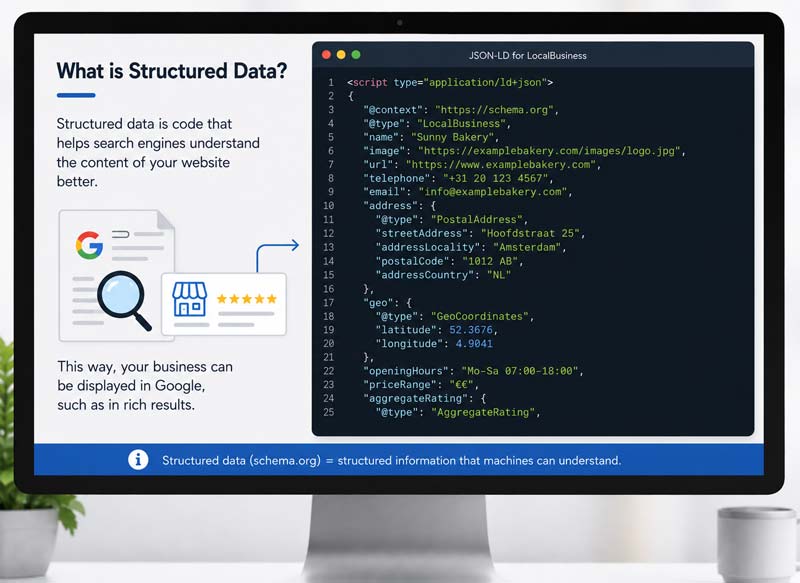
The importance of structured data on your website
Structured data tells Google and AI tools like ChatGPT who you are and what you do. Without this code your website often gets skipped in AI answers, even when the content itself is fine.
How to migrate from Divi 4 to Divi 5
Divi 5 had its official release on February 26, 2026. Divi 4 stays supported until at least the end of February 2027. Read the full step-by-step guide for a safe migration without stress.
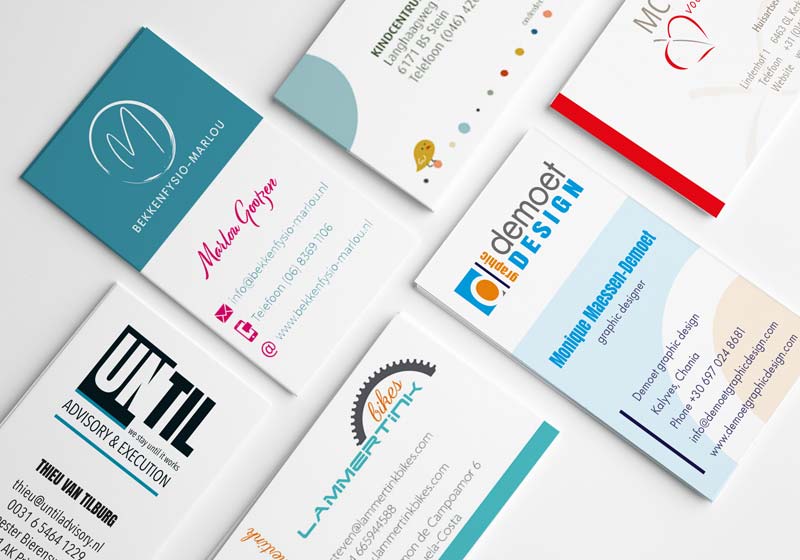
Why have a business card designed?
Having a business card designed costs €75 at Demoet graphic design and keeps working as your silent representative for years. 39% won’t do business with an entrepreneur with a sloppy card.
Share this blog?