
How do you choose a good web designer?
by Monique Maessen-Demoet, web designer at Demoet graphic design
These are the five things I would check myself.
You need a website. Maybe your first, maybe your third already. But how do you know if the web designer you’ve found is actually any good? The internet is full of them: web designers who all claim to be the best, beautiful examples on their sites, glowing testimonials. But behind that shiny exterior, all sorts of things can be hidden.
I am Monique, and I have been creating websites for entrepreneurs for years. I know what works and what doesn't, and I hear from clients about their experiences with other web designers. Sometimes those stories aren't great. A website that isn't found. A design that looks hopelessly outdated after just a year. A designer who stops responding after delivery.
That is why I am simply sharing here what I would do myself if I had to choose a web designer. Not as a personal sales pitch, but as an honest guide from someone who has been in this field for a very long time.
You choose a good web designer by critically examining their portfolio, asking about search engine optimization, checking whether you retain ownership of your website, comparing prices fairly, and trusting your gut feeling during the initial contact.
1. View the portfolio with critical eyes
Portfolios are always carefully selected. Every web designer showcases their best work. Nevertheless, you can get a lot out of them if you know what to look for.
Click through the websites in the portfolio. Do they work well on your phone? Do they load quickly? Or do you feel like you are looking at a painting that is beautiful, but where the door won't open? A website that looks stunning but is technically flawed is worthless to you as an entrepreneur.
Also, pay attention to whether the websites suit the client. A web designer who builds both a bakery and a law firm using the same template isn't really adapting to the client. That says something.
Furthermore, feel free to ask: 'May I speak to one of your clients?' A good web designer will say yes. One who prefers not to is already telling you something.
Pay attention to the details
Are there typos on the websites in the portfolio? Are images blurry or misaligned? Details say a lot about how someone works. A web designer who is meticulous in their own presentation will be just as meticulous in your website. Also check if the websites listed in the portfolio still actually exist and are current. A portfolio full of outdated or defunct sites is not a good sign.
2. Ask further questions about search engine optimization
You want to be found via Google. That is not a luxury; that is the reason you are building the website. Yet, for many web designers, search engine optimization is a secondary concern.
Ask directly: 'How are you going to make my website findable?' If the answer remains vague, that is a sign. A web designer who takes search engine optimization seriously knows which keywords are important for your business, how the technical structure of the website needs to be prepared for this, and why loading speed matters.
A website that looks beautiful but sits on page seven of Google will not bring you new customers. And ultimately, that is what you are paying for.
For my clients, I always ensure the foundation is solid: the right keywords in the right place, fast loading times, and good display on phones and tablets. No vague promises about 'ranking high,' but concrete steps that really deliver results for a company like yours.
What should you ask about the technical side?
A good website loads quickly, works on all devices, and has a valid security certificate. You can see the latter by the padlock icon in your browser's address bar. Explicitly ask the web designer if all these things are arranged as standard. If you are faced with a 'that depends' or a whole lot of extra costs, you know enough.
3. Check if you remain in control of your own website
This is a point where things can go so wrong. I see it regularly: an entrepreneur has had a beautiful website built, but that website is hosted on the web designer's server. The domain is registered in the web designer's name. The statistics are linked to the web designer's account.
And then the collaboration ends. Or the web designer significantly raises their rates. And you are left empty-handed.
In every conversation with a potential web designer, ask these questions:
- Is the website hosted on my own hosting account?
- Is the domain registered in my name?
- Are the statistics linked to my own account?
The answer to all three must be yes. No ifs, no 'we'll sort that out later'.
What should you ask about the management system?
A good web designer will provide you with a website that you can manage yourself. Editing text, uploading a new photo, posting a blog: you should be able to do all of this without having to call the web designer. WordPress is the most widely used system for this, and not without reason. It is reliable, flexible, and you can always find someone to handle it if you ever switch web designers. Also ask if you will receive training after delivery. A half-hour explanation on how to manage your own website is the minimum. If that is not included, ask for it.
If that isn't included, ask about it. Are you unsure whether you’d rather make adjustments yourself or outsource the work? In my blog post about maintaining a WordPress website yourself versus outsourcing, I outline the pros and cons.

4. Compare prices fairly
Having a website built is an investment. That is logical. But what is a fair price?
A professional website for a freelancer or small business costs €1,990 with me. For that price, you get a multi-page website that works well, is easy to find, and looks sleek on all devices. It is possible to find cheaper options, but then you have to look closely at what is missing.
Beware of web designers who start very low but then send a separate invoice for every adjustment. Or those who tie you down to a monthly subscription that is higher than you expected. Always ask: what does it cost if I want to make changes after delivery? And: are there monthly costs on top of the one-time price?
An honest web designer is transparent about all costs, including those incurred after delivery. They have nothing to hide.
Always compare at least three quotes, but not just on price. A cheap quote without search engine optimization, without maintenance, and without an explanation of how you can manage the website yourself is more expensive in the long run than an honest quote that does include these features.
5. Trust your gut feeling during the first contact
This might sound vague, but it is really important. You are entering into a partnership with someone who needs to understand your business. Who needs to understand your customers. Who needs to sense what you want to project.
Does the web designer respond quickly to your first message? Does he or she ask questions about your goals, your customers, and your business? Or do you immediately receive a standard quote without a single question being asked?
A web designer who starts by asking questions understands that a website is custom work. Not a template that he or she copy/pastes for the umpteenth time, but a website that works for your business.
I always ask my clients many questions before I even start on the design. What is the goal of your website? What do you like? What definitely don't you like? Who is your ideal customer? What annoys you about other people's websites? Those answers form the basis of a website that truly suits you, your customers, and what you want to achieve.
Frequently asked questions about choosing a web designer
How long does it take to have a website built?
That depends on the scope, but for a professional multi-page website, allow for an average of a few weeks from the initial meeting to delivery.
Should I always choose the cheapest quote?
No. Don’t just look at the price; look at what’s included. Search engine optimization, maintenance, and instructions on how to manage the site yourself are part of a fair quote, even if that makes the price slightly higher than the cheapest option.
What if the web designer doesn't respond after delivery?
Make sure to explicitly check this beforehand. A reliable web designer remains available for questions after the project is delivered, without charging extra for minor matters.
Can I switch web designers myself if I am not satisfied?
That is always possible, provided the domain is registered in your name and the website runs on your own hosting account. That is why it is one of the most important things to check beforehand.
Conclusion: choosing a good web designer requires more than one look at pretty pictures
Choosing a good web designer goes beyond looking at a portfolio. It is about trust, transparency, and a collaboration that feels right even after delivery. Critically review the portfolio, ask detailed questions about search engine optimization and ownership rights, compare quotes fairly based on content, and pay attention to how the initial contact feels.
Take your time with this choice. For most entrepreneurs, a website is an investment for several years, not a quick purchase. Choose someone you feel comfortable with and who truly understands your business. Someone who is transparent about costs, who lets you remain in control of your own website, and who is available even after delivery if you have a question.
With over 30 years of experience and many satisfied clients, I know: the foundation is always the same. A good website starts with a good collaboration.
Looking for a web designer who offers all of this?
Do you want a professional website that is easy to find and suits your business? View my web design page or feel free to contact me directly (0031 6 4821 6537). I am happy to brainstorm with you and answer all your questions, even if you are still unsure.
Demoet graphic design helps entrepreneurs and private individuals with web design, graphic design, and interior design. With over 30 years of experience and many satisfied clients, it is a trusted address.
More blogs
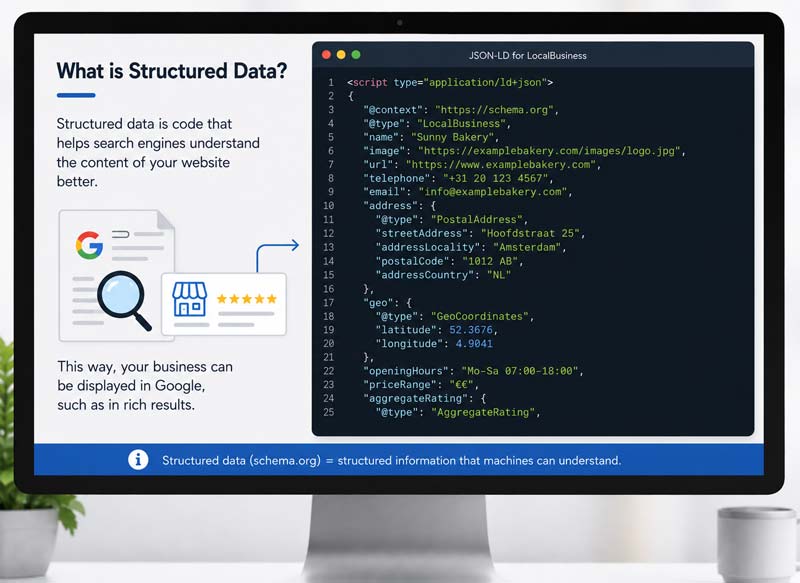
The importance of structured data on your website
Structured data tells Google and AI tools like ChatGPT who you are and what you do. Without this code your website often gets skipped in AI answers, even when the content itself is fine.
How to migrate from Divi 4 to Divi 5
Divi 5 had its official release on February 26, 2026. Divi 4 stays supported until at least the end of February 2027. Read the full step-by-step guide for a safe migration without stress.
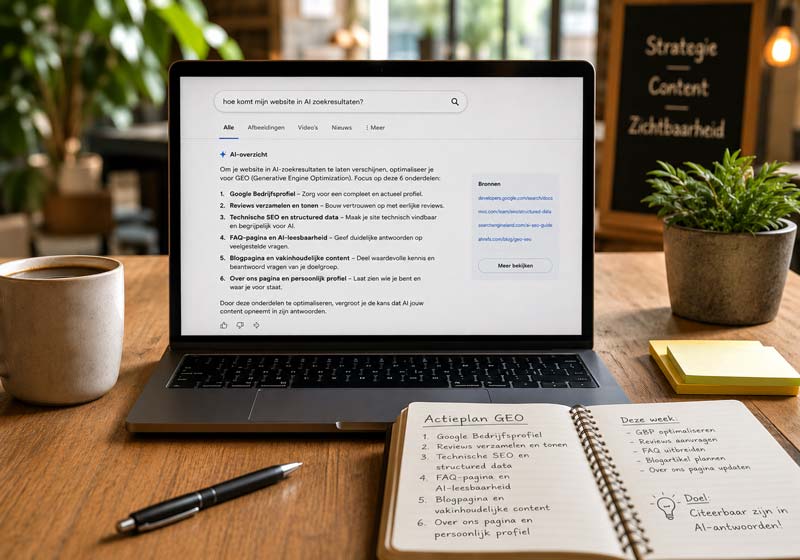
How do I get my website into AI search results?
GEO, Generative Engine Optimization, makes your website readable for ChatGPT and Google AI. These 6 components decide whether AI mentions your business as the answer to a customer’s question.
Share this blog?